FUSION
Lampert USA · Centrifugal casting
FUSION
Compact centrifugal casting for your workshop.
Turn gold and silver into ring blanks with a compact casting machine from Lampert. Explore the process, watch the tutorials, and plan your next project.
Sustainability and resource conservation through upcycling
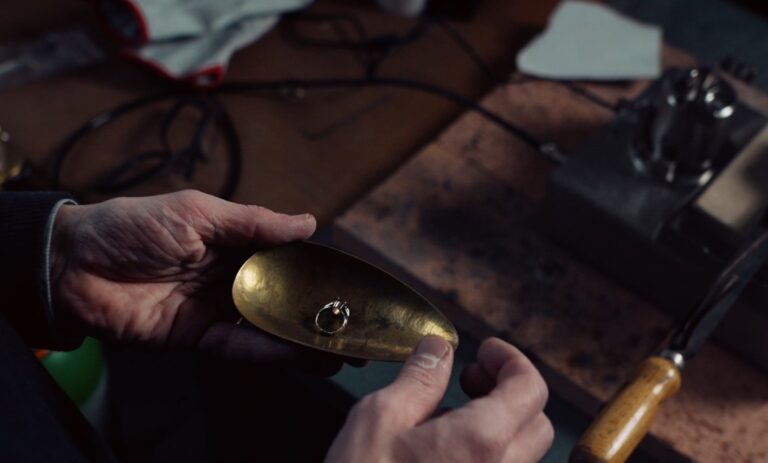
Old gold, new life
Give a treasured ring, bracelet, or other piece of jewelry a new beginning. With FUSION, suitable gold and silver can be recast in your own workshop into a blank for a new, custom-made ring.
Preserve the meaning of an existing piece while creating something your customer can wear and enjoy again.
From family keepsakes to unworn jewelry, upcycling brings a personal story into a new design.
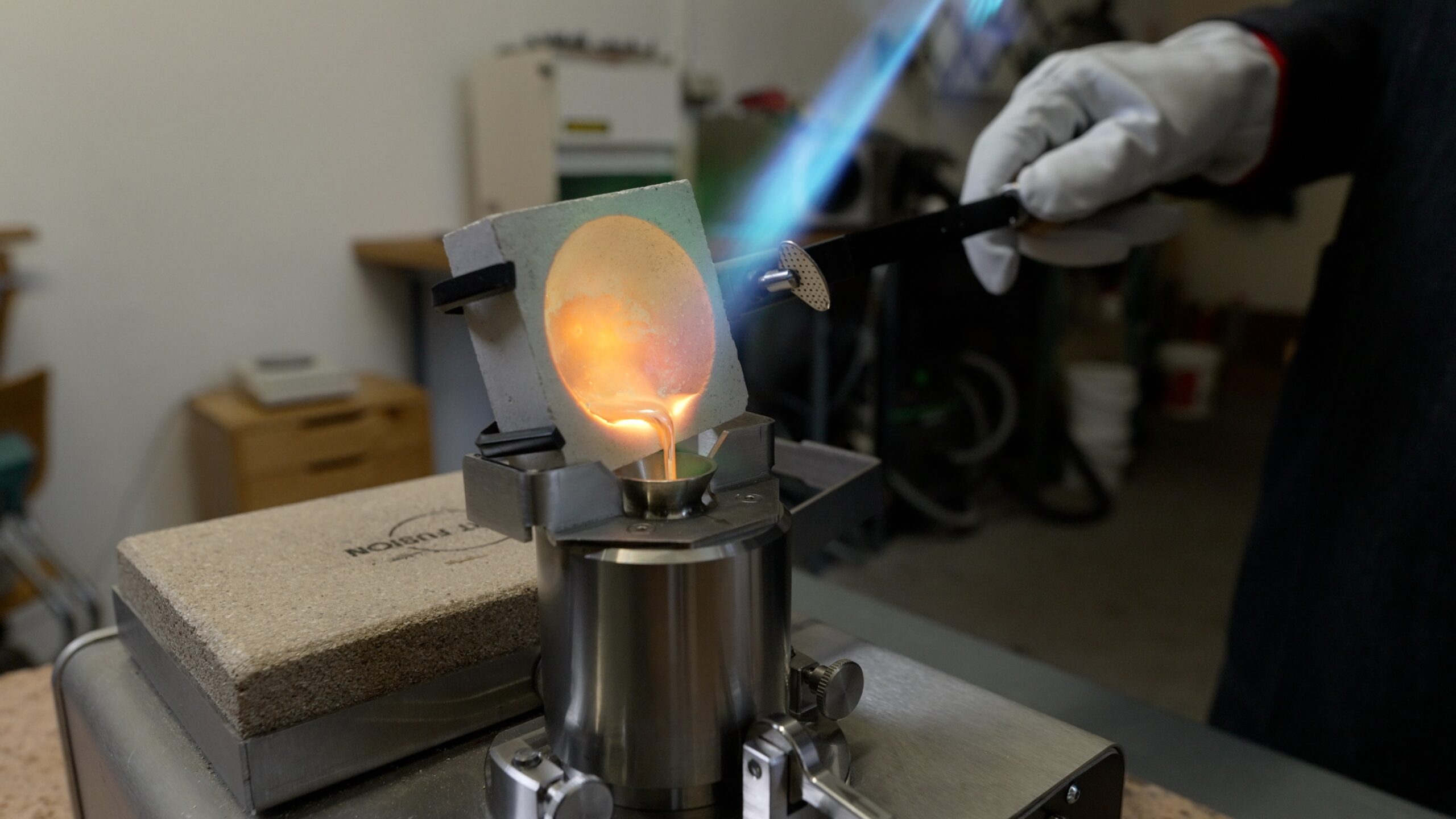
Make more of precious resources
Precious metals deserve careful use. Reworking existing material gives gold and silver another purpose and keeps valuable resources in circulation.
Bringing the casting stage into your workshop can reduce the need to send material elsewhere and gives you greater control over the process.
Thoughtful craftsmanship begins with how you select, handle, and reuse your materials.

Direct casting. Less excess.
Conventional casting often uses sprues that must be removed and processed after the casting.
FUSION’s sprueless centrifugal casting process directs the molten metal into the ring mold, creating a blank ready for further work.
Plan the metal quantity to suit your project, allowing for the forming and finishing needed to achieve the final design.
Why choose FUSION?
- Compact format: a small footprint for the jewelry workshop.
- Reusable molds: cast ring blanks without investment molds or sprues.
- Gold and silver: create blanks for subsequent forming, machining, and finishing.
- Adjustable rotation: control the machine using the rotary push control and integrated display.
- Made in Germany: developed and manufactured by Lampert.
How does centrifugal casting work?
The alloy is melted separately and poured into the prepared mold. Rotation distributes the metal around the mold to form a ring blank.
Once the casting has cooled sufficiently, the blank can be removed and worked into the finished ring. Mold selection, alloy quantity, and preparation influence the result.
This overview complements the operating manual and practical training.
The art of the perfect ring in 3 steps
Watch Lampert’s three guides covering setup, preparation, and casting. Play a video here or open it on YouTube.
Initial setup
Get familiar with FUSION and see how the machine is prepared for use.
Watch on YouTube ↗Preparation for casting
Explore the preparation stage, including the mold and material planning.
Watch on YouTube ↗Casting and spinning
See centrifugal casting transform molten metal into a ring blank.
Watch on YouTube ↗Videos by Lampert. Follow the operating manual for complete setup, operation, and safety instructions.
Plan your next casting
FUSION ring calculator
Estimate your material needs, calculate blank dimensions, or convert inside diameter to an approximate US ring size.
How much material do I need for my ring?
What ring can I cast from my material?
Calculate the inside diameter of a ring.
Inside diameter = outside diameter − (2 × wall thickness)
Geometric dimensions only; casting shrinkage and finishing allowances are not included.
Molds & ring dimensions
Lampert lists molds for ring blanks with outer diameters of 18, 21, and 24 mm, with band widths up to 10 mm.
Choose the mold and metal quantity to suit your intended blank. Allow material for subsequent processing and finishing. Confirm the supplied mold and any additional mold options on the product listing.
Technical specifications
| Application | Centrifugal casting of gold and silver ring blanks |
|---|---|
| Casting quantity | 5–15 g; maximum 15 g |
| Maximum rotation speed | 3,000 rpm |
| Dimensions (W × D × H) | 310 × 210 × 175 mm |
| Weight | Approximately 5 kg |
| Power supply input | 100–240 V AC, 50/60 Hz |
| Machine supply | 24 V DC via external power supply |
| Power consumption | Maximum 5 W at 2,750 rpm |
| Housing | Brushed stainless steel |
| Motor | Brushless DC motor |
| Protection rating | IP20 |
Equipment & preparation
FUSION works with separate equipment for melting the alloy. Prepare your workspace, suitable melting tools, mold, and required protective equipment according to the manual.
- Use a suitable, stable working surface and follow the installation instructions.
- Select and prepare the correct mold for the project.
- Check the alloy quantity before melting.
- Optional shielding gas must be connected and adjusted according to the manual.
Practical casting tips
- Start with the operating manual and the three tutorial videos.
- Use appropriate mold preparation and release coating as specified by Lampert.
- Choose rotation settings to suit the mold and alloy.
- Allow sufficient cooling before handling or removing the casting.
- Inspect and maintain the mold between projects.
Contact Lampert USA if you need help choosing equipment or locating instructions.
Operating manual & casting tutorial
Keep the operating manual available in your workshop and review it before using the machine.
Pricing, availability & ordering
Visit the FUSION product listing for current pricing, availability, and purchasing options. Contact Lampert USA to confirm included equipment, accessories, and applicable warranty terms.
View FUSION Product & Pricing →